Poker Rakeback vs Sportsbook Rewards: Breaking Down the Best Loyalty Deals in 2026
Poker Rakeback vs Sportsbook Rewards: Breaking Down the Best Loyalty Deals in 2026
What Rakeback Means for Poker Players Today
Players diving into online poker quickly learn that rakeback stands as a cornerstone of long-term value, essentially a rebate on the rake—the small commission sites take from each pot, often hovering between 5% and 10% depending on stakes and format; top rooms return 20% to 60% of that rake directly to players through various methods, whether monthly cashouts or points-based systems convertible to bonuses. Data from industry trackers reveals average grinders at mid-stakes reclaim 25-35% of their generated rake annually, turning what could be a house edge into a player-friendly adjustment, especially since poker relies on skill over pure chance.
Take GGPoker, which leads with its Fish Buffet program offering up to 60% rakeback via a tiered loyalty ladder climbing from 15% at entry levels to peak rewards for high-volume players; observers note how this structure incentivizes consistent play across cash games and tournaments alike, while ACR Poker delivers a steady 27% through its elite leaderboard system, blending rakeback with leaderboards that dish out extra prizes. And then there's partypoker, where the Mash VIP program caps at 50% for diamonds, but players accumulate points redeemable flexibly, making it a favorite among Europeans navigating regulated markets.
What's interesting here lies in the calculation methods—most sites employ the dealt rakeback model, weighting contributions based on hands played rather than just pots won, so even losing sessions build toward rebates; this contrasts sharply with tournament rakeback, often lower at 10-20% because structures include fixed fees, yet data shows tournament grinders still net substantial returns during peak seasons like the upcoming WSOP Online series kicking off in March 2026.
Sportsbook Loyalty Schemes: Points, Boosts, and Beyond
Sportsbooks flip the script with loyalty programs built around wagering volume rather than game-specific fees, awarding points or tiers for every bet placed across sports from NFL to soccer; FanDuel's FanCash system, for instance, grants 1% to 10% back in site credit based on VIP status, redeemable only for future bets while carrying playthrough requirements that can stretch value thin for casual bettors. DraftKings counters with Dynasty Rewards, a unified program across casino, poker, and sportsbook yielding milestone rewards like odds boosts or deposit matches, but figures indicate average users redeem just 5-8% effective return since points expire and tiers reset seasonally.
BetMGM's MGM Rewards stands out for its real-world perks, linking online play to hotel stays and event tickets at partner resorts, yet online-only players often see diluted value at around 3-5% cash equivalent because redemptions favor high-rollers; Bet365 in select markets offers a simpler iPoints setup converting bets to free bets at rates up to 1 point per $10 wagered, exchangeable at 200:1 for cash, which researchers peg as straightforward but rarely exceeding 15% for dedicated users. These schemes shine during major events—think March 2026's NCAA March Madness frenzy—when temporary boosts like enhanced parlays or profit boosts layer on top, yet the core remains tied to straight bets without poker's skill multiplier.
Industry reports highlight how sportsbooks emphasize retention through gamified tiers (bronze to diamond), with data showing 40% of loyal customers stick due to personalized offers, although effective rake—or vig—rebates pale compared to poker's direct returns since vig typically sits at 4-10% per bet without equivalent high-percentage kickbacks.
Head-to-Head: Value Breakdown by Player Type
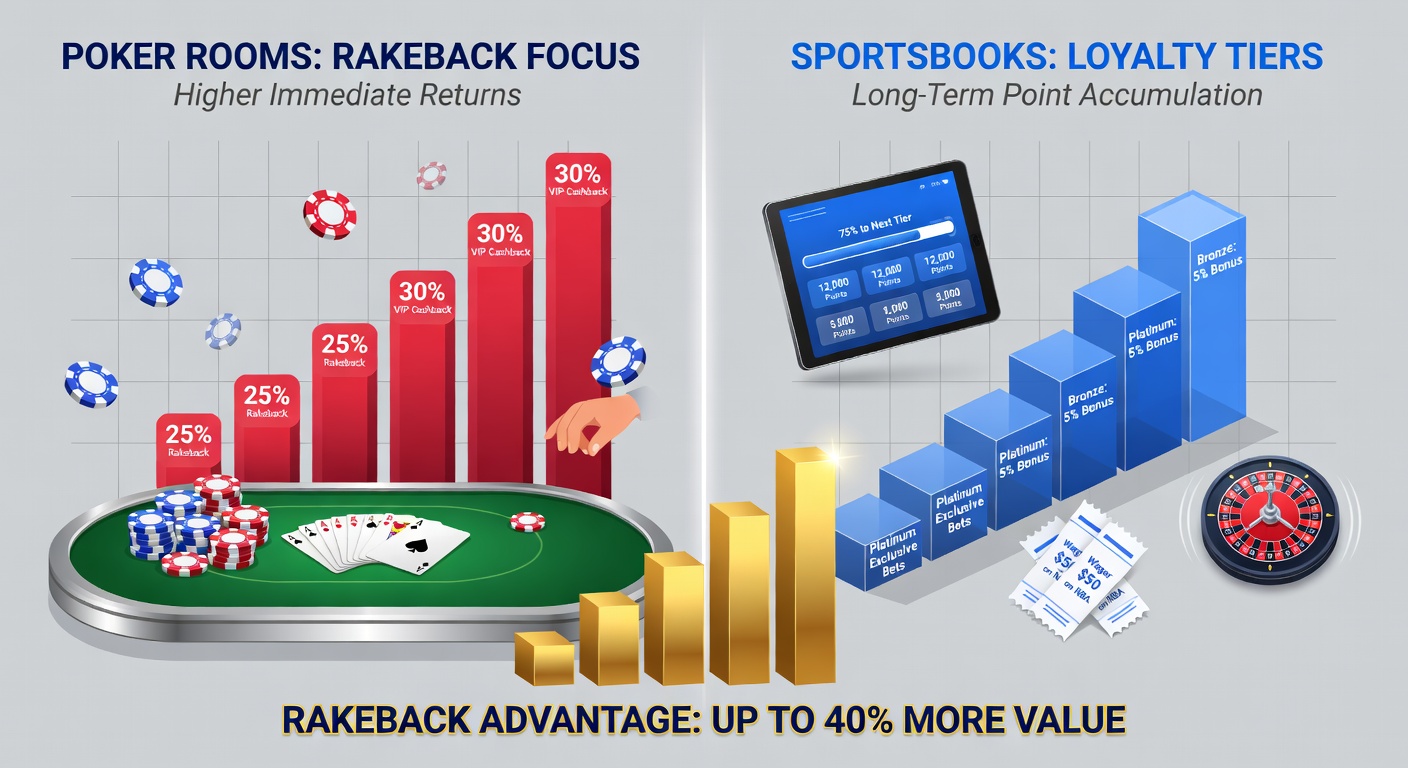
Grinders favoring poker rakeback often discover outsized edges—studies from Pokerfuse, an industry analysis site based in Malta, reveal mid-stakes cash players netting $5,000-$20,000 yearly from 30% rakeback on $100k+ volumes, far outpacing sportsbooks where equivalent volume might yield $1,000-$5,000 in bonuses after rollovers. Casual players, however, find sportsbooks more accessible since loyalty accrues on any bet size without needing table discipline, although effective rates drop to 1-3% for infrequent action; one case from US regulated states shows a basketball bettor climbing DraftKings tiers in a month during playoffs, scoring $500 in boosts off $10k wagered, solid but no match for poker's compounding rebates.
But here's the thing with hybrids—platforms like Bet365 or ACR blending poker and sports deliver cross-product points, letting players stack rakeback atop sportsbook perks; turns out data from the American Gaming Association indicates multi-product users retain 25% higher lifetime value, a trend accelerating into March 2026 as sites ramp up integrated promos ahead of spring tournaments and leagues. High-rollers tip toward poker too, where uncapped rakeback scales infinitely with volume, whereas sportsbook caps often lurk at $50k monthly bets before diminishing returns kick in.
Tax implications add nuance, especially in the US where poker rakeback counts as income but sports credits sometimes skirt direct reporting, although experts observe both demand tracking for serious volumes; globally, EU players under Malta Gaming Authority oversight enjoy clearer rebate taxation, boosting poker's appeal in regulated zones.
Trends Shaping Loyalty in March 2026 and Beyond
As March 2026 approaches with WSOP satellites firing up alongside NBA playoffs and Six Nations rugby, top poker rooms roll out limited-time rake races doubling standard back—GGPoker's Crush tables already tease 100% races—while sportsbooks counter with parlay insurance and cashback during Madness brackets; observers note how crypto-integrated sites like CoinPoker push rakeback to 33% in BTC, sidestepping fiat delays and appealing to international fields. Retention metrics climb too, with platforms reporting 15-20% play increases from loyalty tweaks post-2025 regulations.
Player migration patterns emerge clearly—data tracks a 12% shift from pure sportsbooks to poker hybrids in 2025, driven by rakeback's reliability amid sportsbook promo volatility; those who've crunched numbers often pivot to sites like 888poker, where 35% legacy rakeback pairs with sports side bets, creating hybrid havens. It's noteworthy that mobile-first designs now dominate, with apps converting loyalty seamlessly across devices, ensuring grinders never miss accrual even on the go.
Challenges persist, though—poker demands volume for tiers, alienating newbies, while sportsbooks battle rollover hurdles that lock bonuses; yet for value hunters, the math favors rakeback's directness, especially as AI tools emerge helping players optimize table selection for max rebate.
Key Takeaways for Maximizing Returns
- Poker rakeback delivers 20-60% direct rebates, scaling with skill and volume for grinders.
- Sportsbook programs offer 1-10% via points and boosts, better for casuals chasing events.
- Hybrids like ACR blend both, ideal for diversified players eyeing March 2026 action.
- Track effective hourly rates—poker often wins at $10+/hour rebate for mids.
- Choose based on playstyle; data shows hybrids retain users longest.
Wrapping Up the Loyalty Landscape
Navigating rakeback riches against sportsbook schemes boils down to playstyle and volume, with poker edging ahead for dedicated players through scalable, skill-aligned returns while sportsbooks keep casuals hooked via event-tied perks; as March 2026 heats up, platforms innovate further, blending models to capture every wager type. Those eyeing long-term value stick to data-driven choices, tracking rebates across sites to where the real riches flow steadily, no matter the game.