The Technology Powering Personalized Promotions in Mobile Gaming Applications
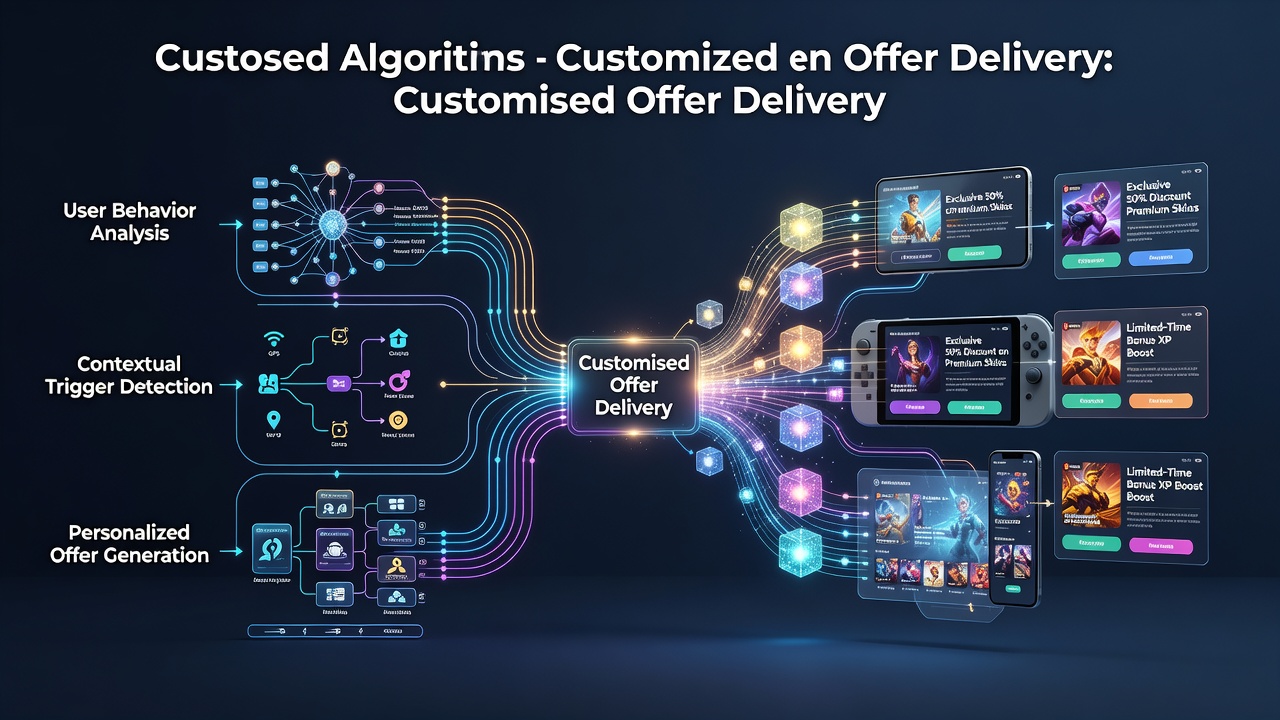
Portable gaming applications rely on sophisticated algorithms to deliver customized offers that match individual user patterns, and these systems process vast datasets to adjust incentives in real time. Developers collect signals from gameplay duration, in-app purchase history, device location, and session frequency before feeding the information into machine learning models that predict which promotions will drive engagement. Researchers at institutions such as the Massachusetts Institute of Technology have documented how collaborative filtering techniques group users with similar behavior profiles, allowing platforms to surface targeted rewards without manual intervention.
Data Inputs That Shape Offer Targeting
Algorithms begin by ingesting structured and unstructured data streams that include time-stamped events, demographic attributes where available, and device telemetry. A single user session might generate hundreds of data points covering spin rates in slot-style games, win frequency, or time spent browsing reward menus, and these inputs flow into feature engineering pipelines that normalize values for model consumption. Engineers at companies operating across multiple jurisdictions apply clustering methods to segment audiences into cohorts such as high-frequency players or those who respond to time-limited bonuses, then route each cohort toward distinct offer templates.
Reinforcement learning components further refine the process by treating every delivered promotion as an action and measuring subsequent user responses as rewards, so the system iteratively improves selection accuracy. Studies published in academic journals show that such models converge on optimal strategies after several thousand iterations, reducing the number of irrelevant offers users receive.
Real-Time Decision Engines and Model Architectures
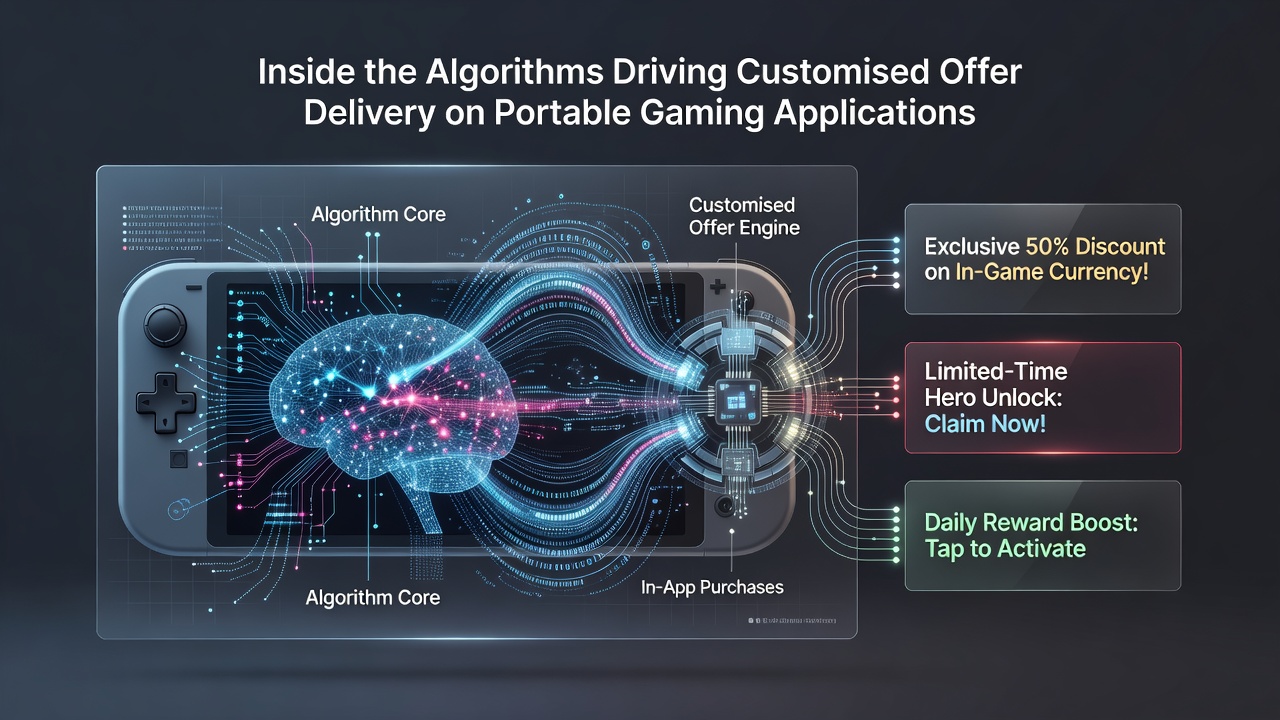
Once data reaches the decision layer, gradient-boosted trees or neural network classifiers evaluate thousands of candidate offers in milliseconds, ranking them according to predicted lift in metrics like session length or deposit probability. These engines often sit behind API endpoints that mobile applications query whenever a user opens the rewards tab, ensuring offers reflect the most recent activity. A/B testing frameworks run continuously in parallel, splitting traffic between algorithm variants to measure performance differences before the winning configuration becomes the default.
Geographic and regulatory constraints also enter the calculation, since different regions impose distinct rules on bonus structures and data usage. Platforms therefore embed compliance checks that filter out ineligible offers before they reach the user interface, drawing on configuration files updated by legal teams. The Interactive Games and Entertainment Association has published guidance documents that outline how operators in Australia integrate these checks into automated pipelines, and similar practices appear in reports covering North American markets.
July 2026 Developments in Personalization Infrastructure
By July 2026 several major operators had rolled out updated personalization stacks that incorporate federated learning techniques, allowing models to train across distributed devices while keeping raw user data localized. This approach addresses privacy concerns raised by regulators in multiple jurisdictions and reduces latency for offer generation. Observers note that latency reductions translate directly into higher conversion rates because offers appear within the same session rather than after a delay.
Integration with wearable device APIs has also expanded the feature set, supplying additional context such as heart-rate variability during play sessions that some experimental models use to gauge engagement levels. Although deployment remains limited, early adopters report measurable improvements in offer relevance scores according to internal dashboards shared at industry conferences.
Case Examples of Algorithm Deployment
One European operator implemented a hybrid model combining matrix factorization with contextual bandits, resulting in a documented 18 percent increase in offer redemption rates within six months of launch. The same system dynamically adjusted bonus sizes based on remaining marketing budget and real-time user value estimates, preventing overspend while maintaining competitive positioning against rival platforms. Another case from an Asian market involved graph neural networks that mapped social connections among players, then surfaced group-based rewards that encouraged collective participation in limited-time events.
These examples illustrate how the underlying mathematics adapts to local user bases and product mixes, yet the core pipeline of data ingestion, model inference, and delivery remains consistent across implementations. Industry reports from research firms tracking global mobile gaming indicate that personalization spend as a percentage of total technology budgets continues to rise steadily.
Conclusion
The algorithms driving customized offer delivery on portable gaming applications combine data engineering, machine learning, and real-time optimization to match incentives with individual behavior profiles. Continued advances in privacy-preserving techniques and cross-device integration point toward increasingly granular targeting capabilities, while regulatory frameworks in various regions shape the boundaries within which these systems operate. Data from academic studies and industry associations confirms that such technology now forms a core component of mobile gaming infrastructure worldwide.